

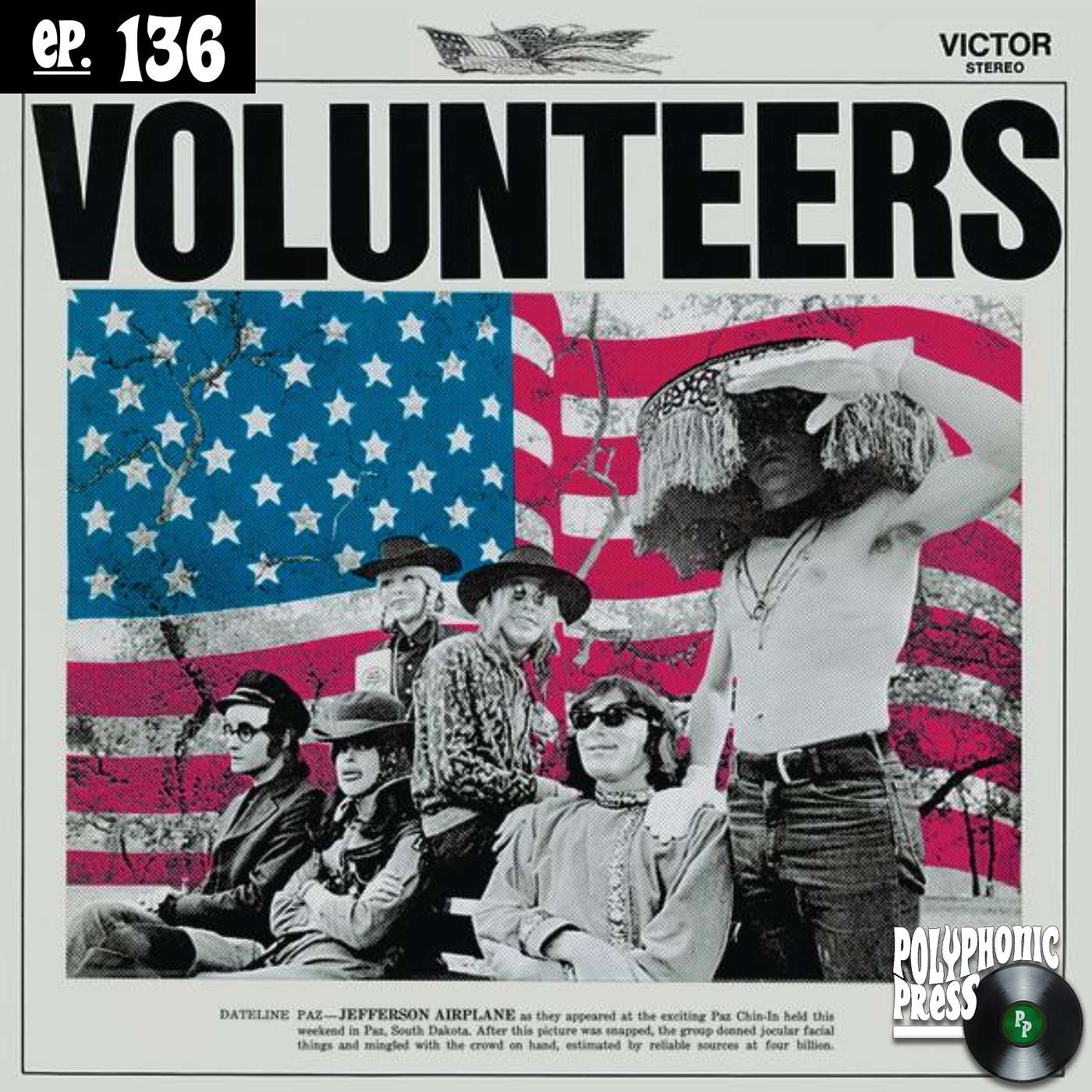
By 1969, the San Francisco psychedelic rock scene was peaking at the heights of Woodstock, but Jefferson Airplane responded by releasing an aggressive, politically charged behemoth that completely defied expectations. Volunteers traded the trippy, surrealistic pop of their earlier work for a heavy, militant mix of blistering acid rock, country-twang, and radical anti-establishment commentary. This week, the Random Album Generator gives us the defining musical manifesto of the late-60s counterculture—a 10-track journey through revolution, environmentalism, and undeniable sonic power.
Inside This Episode:
First Half Reaction: We’re splitting this 10-track psychedelic rock manifesto down the middle. If you're listening with us, hit pause after track five, “Good Shepherd.” Jeremy and Jon react to the rebellious, profane energy of the opener “We Can Be Together” and the apocalyptic sci-fi folk of “Wooden Ships,” and discuss how the band managed to turn radical, anti-war rhetoric into tightly arranged, multi-vocal rock suites.
5 Fast Facts: We uncover the fierce battle with RCA Records over the uncensored lyrics in “We Can Be Together,” the legal threat from a charity that forced the band to shorten the album's original title, the simultaneous cross-band writing of “Wooden Ships” with Crosby, Stills & Nash, and the secret pedal steel guitar contributions from Grateful Dead frontman Jerry Garcia.
Second Half & Final Thoughts: We hit play on the back half of the record and dive into the heavier, environmental jams like Grace Slick's powerhouse vocal performance on “Eskimo Blue Day” and the blistering, revolutionary title track “Volunteers.” Does the band's shift toward aggressive political rhetoric overshadow the music, or is it exactly what captures the chaotic, revolutionary spirit of 1969?
The Verdict & Standout Tracks: Jeremy and Jon lock in their 3 essential tracks. Is this the absolute pinnacle of 60s politically charged psychedelic rock?